
Mental Health Books Therapists Recommend for Healing & Growth
Explore 14 mental health books for adults, grouped by anxiety, depression, trauma and EMDR, grief, and ADHD. Start with the topic that brings you here, then compare each book's “Best for” label and description. Preview a chapter to see whether its style suits you; you do not need to read the whole list.
How we chose these books
- Session-tested. These are the titles our therapists assign between sessions and hear clients quote back — not a scrape of bestseller lists.
- Clinician-authored. Nearly every book here is written by a psychologist, psychiatrist, or researcher working from evidence, not vibes.
- Matched to severity. Each pick notes who it's for — and this page is honest about when a book is the wrong tool.
- Reviewed July 2026 by the Let'sTalk! Counseling clinical team; new additions from 2021-2024 releases.
On a budget? Nearly every title here is free at the Carrollton, Frisco, or Lewisville public library — or instantly through the Libby app with your library card.
A book is a start — not a substitute
A book can be one way to explore what you are feeling. For personal support, read about individual therapy in Carrollton or ask our team about appointment options. You can review rates and insurance before taking the next step.
Anxiety books that go beyond “just breathe”
Good anxiety books do two things: explain why your brain fires false alarms, and give you practices that retrain it. These three do both — and they use the same CBT and mindfulness foundations our therapists use in session.
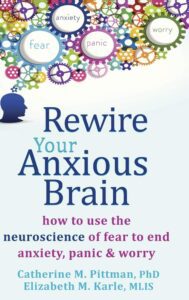
Rewire Your Anxious Brain
by Catherine Pittman, PhD & Elizabeth Karle
Explains the two anxiety pathways — amygdala (body-first panic) and cortex (thought-first worry) — and why each needs different tools. Clients tell us this book made them stop feeling crazy: once you know which alarm is ringing, the exercises finally make sense.
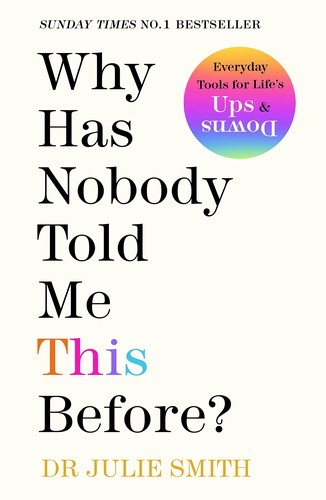
Why Has Nobody Told Me This Before?
by Dr. Julie Smith
A clinical psychologist's bite-sized chapters on anxiety, low mood, motivation, and confidence — each one a tool you can use the same day. Reads like the best moments of therapy, minus the couch. A strong first book for someone new to mental-health reading.
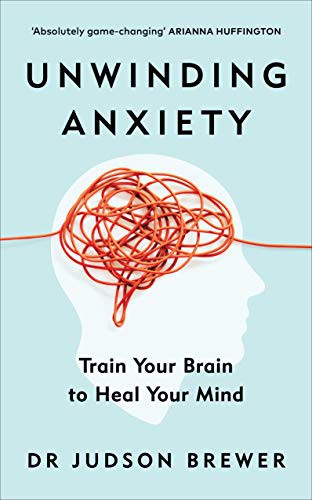
Unwinding Anxiety
by Judson Brewer, MD, PhD
Brewer's research finding: anxiety operates like a habit loop — trigger, worry, unsatisfying relief, repeat — and can be unwound like one. His curiosity-based method suits people who've tried “thought-challenging” and found it turned into more arguing with themselves.
Depression & low-mood classics
Depression shrinks the energy you'd need to fight it — so the right book has to work in small, concrete steps. These two are the ones with the strongest track record, including research showing that working through Burns' book measurably reduces symptoms for many readers.
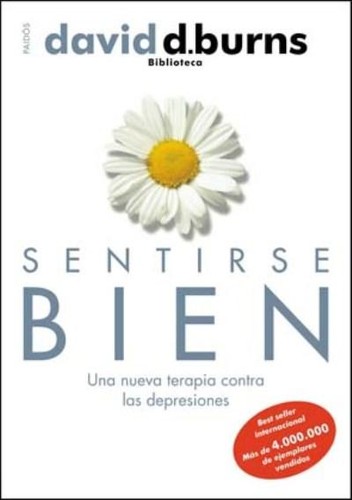
Feeling Good: The New Mood Therapy
by David D. Burns, MD
The book that brought cognitive behavioral therapy to the public, with the distortion lists and thought records therapists still assign fifty years later — ours included. Multiple studies found reading it (“bibliotherapy,” literally this book) meaningfully reduced depressive symptoms. Skip around; you don't need every chapter.
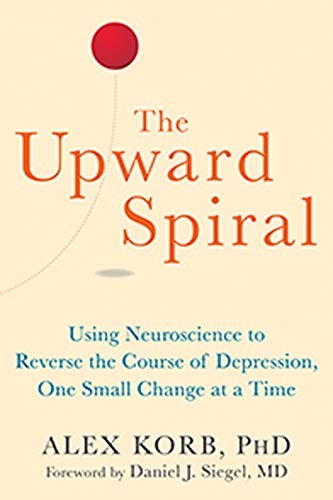
The Upward Spiral
by Alex Korb, PhD
A neuroscientist explains how tiny actions — a walk, sunlight, one text to a friend, naming a feeling — each nudge brain chemistry slightly upward, and how the nudges compound. Written for the energy level depression actually leaves you. Gentle, practical, zero toxic positivity.
Trauma & EMDR books
Trauma books deserve one caution: reading about trauma can stir it up. Go slowly, put the book down when your body says so, and consider reading alongside a therapist rather than instead of one. These four are the field's most-recommended — including the book by EMDR's founder, the modality we use in our own EMDR therapy work.
The Body Keeps the Score
by Bessel van der Kolk, MD
The defining book on how trauma reshapes brain and body — and why healing has to involve more than talking. Heavy in places; many readers do better taking it a chapter a week. If it feels like too much, start with What Happened to You and come back.
What Happened to You?
by Bruce D. Perry, MD, PhD & Oprah Winfrey
A conversation, literally — Oprah asks the questions you'd ask, and Dr. Perry explains how early experiences wire the stress response. Reframes “What's wrong with me?” into “What happened to me?” — the single most healing question in trauma work. Our most-recommended starting point.
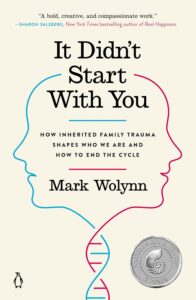
It Didn't Start with You
by Mark Wolynn
On inherited family trauma: how a parent's or grandparent's unprocessed pain shows up in your anxieties, phrases, and relationship patterns — and a language-based method for tracing and interrupting it. Eye-opening if your struggles feel older than your own story.
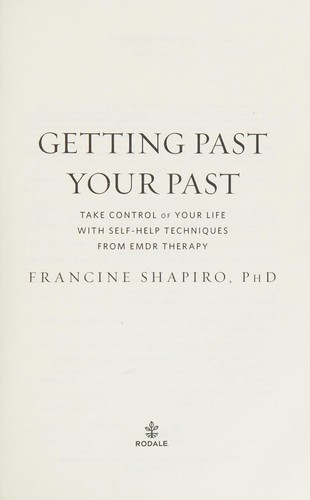
Getting Past Your Past
by Francine Shapiro, PhD
Shapiro invented EMDR — the eye-movement therapy with some of the strongest evidence for PTSD — and this is her plain-English explanation of why small, old memories drive today's reactions, plus self-help techniques drawn from the protocol. The book we suggest to anyone curious how EMDR actually works.
Grief books that don't rush you
The worst grief books treat mourning as a project with a deadline. These three — two by grief educator Alan Wolfelt — do the opposite: they normalize the waves, the anger, the weird moments, and the timeline that refuses to be a timeline.
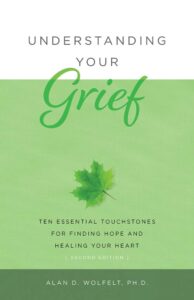
Understanding Your Grief
by Alan D. Wolfelt, PhD
Wolfelt's ten touchstones give grieving people the thing they most need early on: proof they aren't doing it wrong. Companion journal available if writing helps you. The book we mention most to newly bereaved clients.
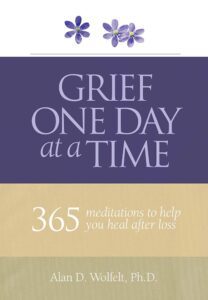
Grief One Day at a Time
by Alan D. Wolfelt, PhD
365 one-page daily readings — built for the season when grief has stolen your attention span and a whole chapter is too much. Lives on a nightstand, asks for two minutes a day, and meets you that many times.
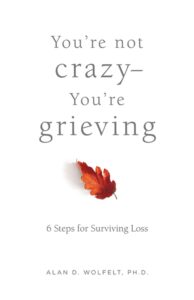
You're Not Crazy — You're Grieving
by Alan D. Wolfelt, PhD
Six short truths for the rawest stretch — the intrusive thoughts, the numbness, the laughing at the funeral, all of it normal. Small enough to finish in an evening, which in early grief is exactly the right size.
Adult ADHD
Adult ADHD books split into two jobs: fixing the shame accumulated over decades of “just try harder,” and building systems that fit your brain. One of each:
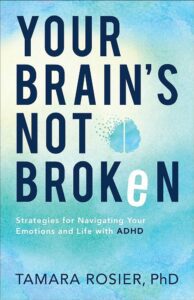
Your Brain's Not Broken
by Tamara Rosier, PhD
Rosier explains the part other ADHD books skip — the emotional intensity, rejection sensitivity, and shame spirals — and offers strategies that treat you as a person, not a productivity project. Frequently the book that makes newly diagnosed adults feel seen.
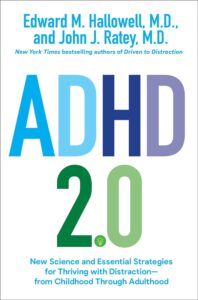
ADHD 2.0
by Edward M. Hallowell, MD & John J. Ratey, MD
From the field's best-known clinicians (both have ADHD themselves): the updated science, the strength-based reframe, and practical moves for attention, exercise, medication questions, and relationships. The right first book after a diagnosis at any age.
What is bibliotherapy — and does it actually work?
Bibliotherapy is the structured use of books as part of mental-health care — and it's not a wellness buzzword. It's one of the best-studied low-intensity interventions in psychology: guided reading of CBT-based books like Feeling Good has repeatedly shown measurable reductions in depression and anxiety symptoms, especially for mild-to-moderate struggles.
That's why our therapists “prescribe” chapters between sessions. A book extends therapy into the other 167 hours of the week: you meet an idea in session, then the book lets you sit with it, re-read it, and practice at your own pace.
The honest limits: books work worst exactly when you need help most — severe depression guts the concentration reading requires, and trauma content can flood you without someone to help you land. That's not a reason to skip the books. It's a reason to pair them with a person.
Make it stick: the 3-touch rule
Our shorthand for clients: read it (a chapter, not the book), mark it (one sentence that hit — highlight or photo), use it (one action from the chapter within 48 hours). One chapter applied beats ten chapters admired.
Reading for a specific struggle?
Jump to anxiety, depression, trauma & EMDR, grief, or adult ADHD — or see our separate lists for couples and kids & teens.
Questions parents & clients ask us about these books
Is The Body Keeps the Score too intense to read on my own?
For some people, yes — it describes trauma vividly, and readers with their own trauma history sometimes find it activating. That doesn't make it off-limits; it makes pacing the skill. Chapter a week, stop when your body tenses, and if you notice nightmares or flooding, pause the book and bring it to a therapist. What Happened to You? covers similar ground far more gently.
Can I do EMDR from a book?
No — and Francine Shapiro says so in her own book. Getting Past Your Past teaches self-calming techniques from the protocol and explains how reprocessing works, but actual EMDR requires a trained clinician guiding bilateral stimulation while you hold the memory. The book is excellent preparation; the therapy is the treatment.
Do self-help books actually work for anxiety and depression?
For mild-to-moderate symptoms, the evidence is genuinely good — structured CBT bibliotherapy (Feeling Good is the most-studied example) produces real symptom reduction for many readers, especially with some guidance. For severe symptoms, books underperform because the illness attacks the very faculties reading requires. Honest rule: if you've worked a good book for a month and you're not moving, that's data — add a person.
What should I read before my first therapy session?
Nothing is required — but if you want a head start, Why Has Nobody Told Me This Before? gives you a shared vocabulary fast, and whichever section above matches your reason for coming in will make the first sessions feel familiar. Mention what you've read; it tells your therapist where you already are.
More reading lists from our therapists
Ready for more than a book?
Talk with our Carrollton team about individual therapy, EMDR, or trauma care. Share what you are looking for, ask about current openings, and confirm the rate or insurance arrangements for your therapist.
Let'sTalk! Counseling · 4125 Fairway Dr Suite 130, Carrollton, TX 75010 · (972) 885-1222
Serving Carrollton, Coppell, Lewisville, Flower Mound, The Colony & the DFW metro — in person and online.
Want our reading lists showing up first on Google? Add us as a preferred source