
For Texas parents, checked November 2026
504 plans in Texas for anxiety and ADHD: a guide for parents
A 504 plan is the school's written list of supports, such as extra time on tests or breaks from class, for a student whose condition limits learning or another major life activity. This guide covers who qualifies, how to ask, what happens at the meeting and what to do if you disagree, with the 504 contacts for three districts near our Carrollton office.
- 504 contacts for Carrollton-Farmers Branch ISD, Lewisville ISD and Coppell ISD.
- Each rule here comes from a federal, Texas or district source, listed at the bottom of the page.
The basics
What a 504 plan is
Section 504 is a federal law that bars discrimination based on disability in programs that receive federal money, including public school districts. It requires a district to give each qualified student with a disability a free appropriate public education. In plain words, the school has to meet your child's needs as well as it meets other students' needs.
That can mean changes inside the regular classroom, such as where a student takes a test, how long they get or when they can step out. It can also mean added services. Schools often write these into a document called a 504 plan. The U.S. Department of Education's Office for Civil Rights (OCR) enforces Section 504. The Texas Education Agency (TEA) gives districts guidance and points families to OCR for Section 504 complaints.
504 plan or IEP
How a 504 plan differs from special education in Texas
Special education runs under a different federal law, the Individuals with Disabilities Education Act (IDEA), and leads to an individualized education program (IEP). TEA puts the overlap this way: every student in special education is protected by Section 504, but not every student covered by Section 504 qualifies for special education.
| Section 504 plan | Special education (IEP) | |
|---|---|---|
| The law | Section 504 of the Rehabilitation Act of 1973, a civil rights law | The Individuals with Disabilities Education Act (IDEA), plus Texas law and rules |
| Who qualifies | A student whose impairment substantially limits a major life activity, such as learning, reading, concentrating or thinking | A student who meets one of IDEA's disability categories and needs special education because of it |
| What it provides | Regular classes, regular classes with added services, or special education and related services, based on the student's needs | Special education and related services, written into an IEP |
| Who decides | A group of people who know the student, the evaluation results and the options, often called the 504 committee | In Texas, the admission, review and dismissal (ARD) committee |
| Texas timelines | Set by your district's Section 504 procedures. Ask your campus 504 coordinator. | After a written request to the district's director of special education or a district administrator, the district has 15 school days to ask for your consent or refuse in writing. The evaluation report is due within 45 school days of your written consent, with extra days if your child misses three or more. |
You can ask for either one at any time
Texas law says a parent may request an evaluation for special education or for aids, accommodations or services under Section 504 at any time. Each district has to give parents a written explanation of this every school year, in the student handbook or another way.
Not sure which to ask for?
Say what you are seeing and ask the school which evaluation fits. TEA's Section 504 guidance tells districts that when they are unsure whether a student needs special education, they should start a special education referral.
Who qualifies
Who can qualify, in OCR's words
To be covered, a student must have a physical or mental impairment that substantially limits one or more major life activities, have a record of one, or be regarded as having one. Learning, reading, concentrating and thinking are all major life activities. The school decides student by student, after an evaluation.
Anxiety
OCR's September 2024 fact sheet says a student with an anxiety disorder has a disability under Section 504 if the anxiety disorder substantially limits one or more major life activities. Concentrating is the example it gives.
It also says this can be shown, for example, through a clinical evaluation by the student's pediatrician or physician, or a psychological evaluation. A school may also accept that a student has a disability without any documentation.
ADHD
OCR's guidance for parents says that regardless of how well a student does in school, a student who has trouble concentrating, reading, thinking, organizing or prioritizing because of ADHD may have a disability and be protected under Section 504.
Not every student with ADHD needs the same services, or any services at all. OCR says the school has to look at each student's needs.
- Good grades do not rule it out. OCR's resource guide says a student can be eligible even with good grades, for example when the grades come from spending far longer on schoolwork than other students.
- Medication does not count against your child. When deciding whether a student has a disability, the school cannot consider the helpful effects of medication or other "mitigating measures."
- Conditions that come and go can count. An impairment that is episodic or in remission is a disability if it would substantially limit a major life activity when active.
- A diagnosis is one piece of information. A diagnosis alone does not make a student eligible, and the school cannot rely on a diagnosis alone either. It has to draw on several sources.
Step by step
How to ask for a 504 plan
The school has its own duty to find and evaluate students who may need help because of a disability. You do not have to wait for it. These steps follow OCR and TEA guidance.
-
Write to the campus 504 coordinator
Each campus in the three districts below has a 504 contact, under a different title in each district. Elsewhere, the front office can tell you who it is. TEA's guidance says referrals should be requested in writing, and OCR notes that a written request helps avoid misunderstandings. An email or a letter both count. Keep a copy.
Say your child's name, grade and campus, what you are seeing at school and at home, and that you are asking for a Section 504 evaluation. If you think your child may need special education, ask for that evaluation too.
-
Share what you already have
You can share information with the school before the evaluation, but you are not required to. Things parents often have on hand:
- A diagnosis or report from a doctor, psychologist or other outside evaluator
- Report cards, teacher emails and notes about missed days or late work
- Examples of homework or tests that show the problem
The school must consider an outside evaluation, but it is one source among several and the school makes its own decision.
-
Give written consent
The school needs your consent before an initial evaluation. The evaluation is at no cost to you. If the school requires a medical assessment for ADHD as part of its evaluation, OCR says the school must make sure your child gets it at no cost to you.
-
The school evaluates, or tells you why not
If the school agrees, it draws on several sources, such as tests, teacher recommendations, health information and how your child functions day to day. If it refuses, it has to explain why and tell you how to dispute the decision. OCR also says a school that suspects a disability cannot delay the evaluation to try other interventions first.
The meeting and after
What happens at the 504 meeting
The decision is made by a group of people who know your child, the meaning of the evaluation results and the options. Coppell ISD's Section 504 page walks through questions like these, and Lewisville ISD's page lists the first two:
- Does the student have a physical or mental impairment?
- Does it substantially limit a major life activity?
- Does the student need Section 504 services so their needs are met as well as classmates' needs?
TEA's guidance tells districts to give parents ample opportunity to take part, and a chance to give input if they cannot attend. It also says the plan should be in writing, even though the federal rules do not require a written plan. Ask for a copy, and ask who will make sure each teacher has it. OCR says teachers must follow the 504 plans of the students they teach.
How plans get reviewed
Section 504 requires the school to reevaluate periodically, and before any significant change in placement. OCR treats removing a student from school for more than 10 school days in a row as a significant change.
The federal rules do not set a specific timeframe. TEA notes that some districts choose annual reviews, so ask your district how it handles them. If the plan is not working, ask the campus 504 coordinator about meeting sooner.
Examples
Accommodations schools use for anxiety and ADHD
These come from OCR's own examples. Each plan is built for one student, so your child's may look different. TEA describes accommodations as changes to how a student learns or shows what they know, not to what they are expected to learn.
Examples OCR gives for anxiety
- Taking tests alone in a different location, or with extra time
- Alternatives to large group activities or events
- Making up work without penalty, and excused late arrivals or absences for medical appointments or when symptoms get in the way of schoolwork
- Extra breaks from class as needed
OCR adds that eligible students may get related services such as counseling or tutoring at school. Source: OCR fact sheet on anxiety disorders, September 2024.
Examples OCR gives for ADHD
- Behavioral supports or a behavior intervention plan
- Help with organization
- Extra time to finish assignments or tests
- A different test format for a student who struggles with multiple-choice tests
OCR says schools cannot give every student with ADHD the same set of services, and cannot limit services to ones that are free or low-cost. Source: OCR resource guide on students with ADHD, July 2016.
If you disagree
What to do if you disagree with the school
Every district must have procedural safeguards for 504 decisions: notice, a chance to look at your child's records, an impartial hearing where you can take part and bring a lawyer, and a review procedure. Your district's notice of rights explains how its process works.
-
Start with the campus
Ask the campus 504 coordinator for a meeting to go over the decision or the plan. Bring your questions in writing.
-
Use the district's process
TEA's fact sheet for families says you can file a grievance with the school's Section 504 coordinator. If you disagree with a decision about identifying, evaluating or placing your child, you can ask for an impartial hearing.
-
File with the Office for Civil Rights
OCR handles complaints of disability discrimination, including a school not following Section 504's procedures. A complaint must be filed within 180 calendar days of the discrimination, with limited exceptions. OCR says it generally does not review the content of a 504 plan; disagreements about what the plan should include go to a hearing. You can file with OCR's online complaint form. TEA's family fact sheet lists OCR's Kansas City office for Texas.
This page is general information about federal and Texas rules. It is not legal advice. Your district's procedures and your child's situation decide the details.
District contacts
504 contacts for CFBISD, Lewisville ISD and Coppell ISD
Names, titles and numbers below are copied from each district's own Section 504 page. Staff change, so confirm on the district page before you write.
-
Carrollton-Farmers Branch ISD
- Ask first
- Your campus Section 504 Designee
- District contact listed
- Brenda Weintraub, (972) 968-6696
-
Lewisville ISD
- Ask first
- Your campus principal or assistant principal. LISD lists the campus assistant principal as the 504 coordinator.
- District contact listed
- Trisha Works, M.Ed., District 504 Administrator, (469) 713-5203
- Special education referrals
- Your campus principal, or Tina Clark, Executive Director of Special Education and Section 504, (469) 713-5200
-
Coppell ISD
- Ask first
- Your campus 504 Coordinator
- District contact listed
- April Dyke, Coordinator Intervention Services Section 504, listed as the District Section 504 Designee, (214) 496-6955
-
Any other Texas district
- Ask first
- The campus front office or school counselor, for the name of the campus 504 coordinator
- Where to look
- The student handbook, or wherever the district publishes the yearly explanation Texas law requires of how to request a 504 or special education evaluation
New school year
Starting a new school year with a 504 plan
- Check that new teachers have the plan. OCR says it is vital that teachers and staff can see a student's 504 plan so it is carried out consistently. In the first week, ask the campus 504 coordinator who has a copy.
- Ask when the next review is. A plan written for last year's classes may need changes for a new campus or schedule.
- Watch the first few weeks. If school mornings are getting harder instead of easier, our page on back-to-school anxiety support covers what to look for by age.
Where counseling fits
Where counseling fits alongside a 504 plan
A 504 plan adjusts how school works for your child. Counseling is separate from the school process. A counselor can work with your child on the anxiety or the trouble with focus itself, and with you as parents.
At Let'sTalk!, our counselors see children ages 4 to 12 and teens 13 to 18 for anxiety, school stress and ADHD. Most of our children's therapy includes regular parent consultations. With teens, a parent or guardian gives consent and is kept informed.
We don't provide formal assessment or testing. The 504 evaluation itself is done by the school, at no cost to you. For testing outside school, see our guide to where to get ADHD or autism testing.
Experience on the school side
Our Clinical Director, Amy English, LPC-S, is an ADHD-Certified Clinical Services Provider. Her bio says she began her career in Coppell ISD, and it lists managing ARDs and creating 504 accommodations among her areas of expertise.
She sees children and adolescents for anxiety, depression, ADHD, anger and aggression, conflict resolution and the autism spectrum.
If your child is thinking about suicide or is in crisis, call or text 988 (Suicide & Crisis Lifeline). If your child is in immediate danger, call 911 or go to the nearest emergency room.
Good to know
Questions parents ask about 504 plans
Does anxiety qualify for a 504 plan?
It can. OCR says a student with an anxiety disorder has a disability under Section 504 if the anxiety disorder substantially limits a major life activity, such as concentrating. The school decides after an evaluation.
Does my child need a diagnosis to get a 504 plan?
Not always. OCR's anxiety fact sheet says a school may accept that a student has a disability without documentation or medical tests. A diagnosis you share is one of the sources the school considers, but on its own it does not decide eligibility.
Can a student with good grades get a 504 plan?
Yes. OCR says a student may be eligible even with good grades, because the impairment can still substantially limit a major life activity. A student who earns good grades only by spending far more time on schoolwork than classmates is one example OCR gives.
What is the difference between a 504 plan and an IEP in Texas?
A 504 plan comes from a civil rights law and covers students whose impairment substantially limits a major life activity. An IEP comes from special education law (IDEA) and is for students who meet one of IDEA's disability categories and need special education. In Texas, IEPs are made by the ARD committee. The comparison table above shows the rest.
How long does a 504 evaluation take in Texas?
Section 504 requires each district to set its own evaluation procedures, so ask your campus 504 coordinator for the district's timeline. For special education, Texas law sets the clock: 15 school days to respond to a written request and 45 school days from your written consent to finish the evaluation report.
Can the school say no to an evaluation?
Yes, but it has to explain why and tell you how to dispute the decision through the district's procedural safeguards, including an impartial hearing.
Sources
Where these rules come from
Each source below was checked on November 27, 2026.
- U.S. Department of Education, Office for Civil Rights: Frequently Asked Questions: Section 504 Free Appropriate Public Education
- OCR: Section 504 Protections for Students with Anxiety Disorders (September 2024)
- OCR: Know Your Rights: Students with ADHD and the resource guide on students with ADHD (July 2016)
- OCR: Parent and Educator Resource Guide to Section 504 (December 2016)
- OCR: Questions and Answers on OCR's Complaint Process
- Section 504 regulations: 34 C.F.R. Part 104, Subpart D (evaluation, reevaluation and procedural safeguards)
- Texas Education Agency: Section 504 page, Section 504 Fact Sheet for Families and Technical Assistance: Section 504 (January 2024)
- Texas Education Code Section 26.0081 (right to request either evaluation) and Section 29.004 (special education evaluation timelines)
- District Section 504 pages: CFBISD, Lewisville ISD, Coppell ISD
Next step
In person in Carrollton or online anywhere in Texas
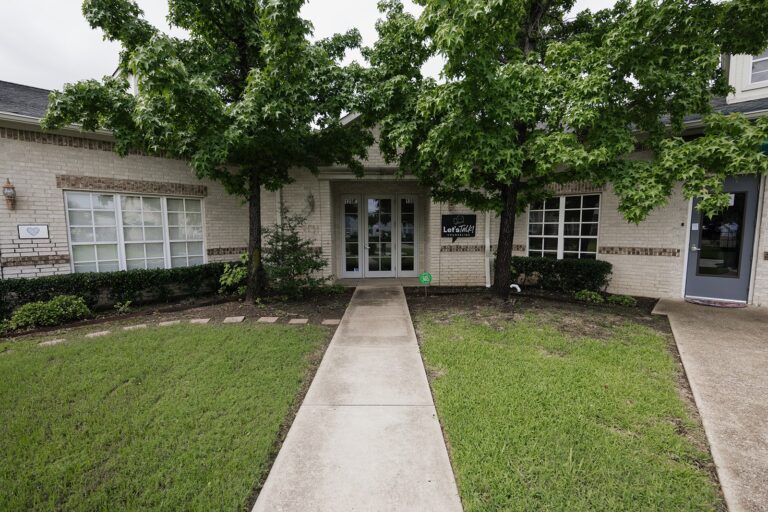
Let'sTalk! is a practice of 14 counselors. We see clients at our office at 4125 Fairway Dr, Suite 130, Carrollton, TX 75010, and by video anywhere in Texas. Same-week openings are often available with some of our clinicians.
We accept BCBS, Aetna, Cigna and UnitedHealthcare/Optum. Self-pay: $140 with an LPC, $100 with an LPC Associate, $50 with our practicum student.
Office hours: Monday to Thursday 8am to 7pm, Friday 9am to 5pm, Saturday 9am to 12pm.
Children's therapy Teen therapy Online therapy in Texas Rates and insurance Meet our counselors