
A guide for parents, checked November 2026
Where to get ADHD testing near Carrollton and Dallas
A child can be evaluated for ADHD, autism or a learning problem in four places around here: the public school, your child's doctor, a hospital or university clinic, or a private psychologist. The school evaluation is free. The others differ in cost, referral rules and wait. This guide walks through each one, with the source for every fact listed at the bottom.
Let'sTalk! is a counseling practice. We don't provide formal assessment or testing. We do counsel children, teens, adults and parents.
- In person in Carrollton or online anywhere in Texas.
- We accept BCBS, Aetna, Cigna and UnitedHealthcare/Optum.
Before you start
A school evaluation and a diagnosis answer different questions
A school evaluation decides whether your child qualifies for special education and what help they need at school. A doctor or psychologist decides whether your child has a diagnosis such as ADHD or autism. Each can inform the other, and you can pursue both at the same time.
ADHD at school
In Texas special education, ADHD is listed under a category called other health impairment. For a student to qualify that way, the school's decision must include identification or confirmation of the condition from a licensed physician, a physician assistant or an advanced practice registered nurse. So for ADHD, a visit to your child's doctor is part of the school route too.
Autism at school
Texas rules say a school's decision that a student meets the criteria for autism cannot require a medical or psychological diagnosis of autism. A school team can find a child eligible without one.
Sources: Texas Administrative Code, 19 TAC §89.1040(c)(1) and (c)(8), and the federal definition in 34 CFR §300.8(c)(9).
Route 1: free
The free evaluation through your public school
Federal special education law (IDEA) requires every state to find, locate and evaluate children with disabilities who need special education, including children in private schools. This duty is called Child Find. In Texas the first evaluation is called a Full Individual and Initial Evaluation (FIIE), and the Texas Education Agency (TEA) says it is done at no cost to you.
- Put the request in writing. Send a dated letter or email to the campus principal or to the district's director of special education. You can ask out loud, but only a written request starts the 15-school-day clock.
- The school answers within 15 school days. It must either propose an evaluation, with a consent form, the Notice of Procedural Safeguards and TEA's Overview of Special Education for Parents, or give you written notice that it refuses.
- You sign consent and the 45-school-day clock starts. The written report is due no later than the 45th school day after the school receives your signed consent. If your child misses three or more school days in that time, the deadline moves back by the days missed. Consent signed late in the spring follows a June 30 rule or carries into the next school year.
- The ARD committee meets. This team includes you, teachers and school staff. Within 30 calendar days of the report, it decides whether your child is eligible and, if so, the plan and placement. You get a copy of the report at least five school days before that meeting.
The school cannot make your child spend a set length of time in classroom interventions before it refers or evaluates, and your child keeps getting needed support while the evaluation is under way.
If you disagree with the school's evaluation, you can ask for an Independent Educational Evaluation by an examiner the school does not employ, at public expense, under the district's criteria. If you share a private evaluation you paid for, the school must consider it if it meets the district's criteria. Considering it does not mean the school has to follow every recommendation.
A sample request you can adapt
[Date]
To: [Principal's name], [School name]. Copy: Director of Special Education, [District]
I am writing to request a Full Individual and Initial Evaluation (FIIE) for special education for my child, [child's full name], date of birth [date], grade [grade].
I am concerned about [what you see, such as attention, behavior, reading or making friends] at school and at home. For example, [one or two specific examples].
Please send me the consent form, the Notice of Procedural Safeguards and the Overview of Special Education for Parents.
Thank you,
[Your name, phone and email]
Keep a copy and write down the date you sent it.
Younger children and other schools
- Under 3: Texas Early Childhood Intervention (ECI) serves children from birth to 36 months with developmental delays or disabilities. Its evaluation is free. Texas Health and Human Services has a search tool for your local program.
- 3 and older, not in school yet: contact your school district's special education director.
- Private or home school: Texas applies the same 45-school-day report deadline to students in a private or home school setting.
504 plans and help with the process
A Section 504 plan is a separate route to classroom accommodations. Our guide to 504 plans for anxiety and ADHD in Texas schools covers how to ask for one. TEA says a parent may request an evaluation for special education or Section 504 services at any time.
For questions about the process, SPEDTex, TEA's Special Education Information Center, takes calls at 1-855-773-3839 and email at inquire@spedtex.org.
Route 2: your child's doctor
Starting with your pediatrician or family doctor
The American Academy of Pediatrics (AAP) has guidelines for pediatricians who evaluate ADHD in children 4 to 18. Its parent site says there is no single test for ADHD. The process takes several steps and gathers information from more than one source.
- Expect forms. You may be asked to fill in checklists or rating scales about your child's behavior, and the doctor may ask your child's teacher for a report.
- Expect a check-up. The CDC says an evaluation includes a medical exam with hearing and vision tests, and questions for parents, teachers and other adults about how your child acts in different settings.
- Book a visit for this concern alone, so there is time to talk. Ask the office ahead of time whether there are forms for you and the teacher to fill in first.
- Ask about a referral. The AAP says a pediatrician may refer a child to a pediatric subspecialist or a mental health clinician. The autism program at UT Southwestern and Children's Health, listed below, takes referrals from your pediatrician.
For ADHD, the doctor's confirmation is also what a Texas school needs under the other health impairment category. Questions about medication belong with your child's doctor.
Route 3: private evaluation
Private psychologists and neuropsychologists
A psychological or psychoeducational evaluation uses interviews, rating scales and standardized tests to look at attention, learning, behavior and emotions. Outside of school, licensed psychologists do this work, or trainees they supervise. A neuropsychologist is a doctoral-level psychologist who specializes in how the brain relates to behavior and learning.
- Check the license. Texas psychologists are licensed by the Texas Behavioral Health Executive Council, and its website has a free license search.
- Plan for more than one appointment. At Children's Health, for example, a neuropsychological assessment for a child 3 or older often lasts a whole day. The parent conference comes about one to two weeks later, and the full report about three weeks after that.
- Ask for the price in writing. Private practices set their own prices, and most of the clinics we checked do not post one. Scottish Rite for Children lists $1,010 for a full evaluation at its dyslexia and learning disorders center, and says medical insurance generally does not cover academic evaluations. UNT's adult psychology clinic sets assessment fees on a scale based on income and household size.
Questions to ask your insurance plan
- Does my plan cover psychological or neuropsychological testing for ADHD, autism or learning concerns?
- Do I need a referral or prior approval first?
- Does my plan cover this evaluator, and what will I owe: a copay, coinsurance, or the full amount until I meet my deductible?
- Will any part of the testing count as educational and not be covered?
- If the evaluator does not take my plan, will you pay back part of it from a superbill?
- Can I pay with my HSA or FSA?
Our page on out-of-network benefits and superbills explains how reimbursement works.
Route 4: hospital and university clinics
Hospital, university and nonprofit programs in Dallas-Fort Worth
Each entry says only what the program's own website said when we checked it. Call before you count on any of it, since ages, referral rules and waits change.
Hospital programs
-
Children's Health: Developmental Behavioral Pediatrics
- What it lists
- ADHD and learning disorders among its conditions, with assessment of attention and learning difficulties, developmental evaluations and neuropsychological assessment
- Ages
- Birth to 12
- How long
- Visits run 60 to 90 minutes. A neuropsychological assessment for a child 3 or older often lasts a whole day, with a parent conference about one to two weeks later.
- Where and how
- Children's Medical Center Dallas. Call 214-456-6500. The clinic asks for a history questionnaire and a records release before it schedules.
Source: childrens.com and its FAQ page
-
UT Southwestern and Children's Health Center for Autism Care
- What it lists
- Diagnostic evaluations for autism in children
- How it starts
- Your pediatrician refers you. For insurance, you send school or medical records that support the concern.
- How long
- About two hours for children under 5, and up to six hours for children older than 5
- Where and how
- Dallas (Mockingbird Lane) and Plano (7609 Preston Rd). Call 214-456-7700.
Source: childrens.com
-
Cook Children's Developmental Psychology
- What it lists
- Licensed psychologists who specialize in autism, ADHD and behavioral differences. Testing covers development and academic skills, with a parent interview, a review of medical and school records, and rating scales from parents and teachers.
- Ages
- 2 through 21
- How it starts
- Assessments are done at the request of doctors, schools and parents.
- Where and how
- Part of Cook Children's Jane and John Justin Institute for Mind Health in Fort Worth. Call 682-303-9300.
Source: cookchildrens.org
-
Scottish Rite for Children: Luke Waites Center for Dyslexia and Learning Disorders
- What it lists
- Evaluations for suspected learning disorders in reading, written expression and math. It does not evaluate children whose difficulties are mainly attention, autism, emotional or behavior problems, and it asks that attention concerns be evaluated before academic testing.
- Who
- Ages 5 to 14, living in Texas, proficient in English
- Wait and cost
- A wait of six to seven weeks after the application is approved. A full evaluation is $1,010, paid before the visit, with a financial assistance program and payment plans.
- Where and how
- 2222 Welborn St, Dallas. Apply through "Request Appointment" on its website. Call 214-559-7815.
Source: the center's diagnostic services FAQ on scottishriteforchildren.org
University training clinics
At the SMU Psychology Clinic and the UNT Psychology Clinic, doctoral students do the testing under licensed psychologists. UNT's Child and Family Resource Clinic is also a graduate training clinic. Some university clinics run on the school calendar.
-
SMU Psychology Clinic
- What it lists
- Psychoeducational evaluations for learning and attention problems and psychological evaluations for emotional or behavioral problems. Common concerns include ADHD, specific learning disorders such as dyslexia, and autism.
- Ages
- 5 to adult
- Who does it
- Doctoral students in SMU's clinical psychology program, supervised by licensed clinical psychologists or SMU faculty. A nonprofit training clinic. Fees are not posted.
- Where and how
- 6116 N. Central Expressway, Suite 1100, Dallas. Call 214-768-2398. The clinic says it calls back within one business day.
Source: smu.edu
-
UNT Child and Family Resource Clinic
- What it lists
- Psychoeducational assessment over three days by a team of counseling and speech, language and hearing specialists. It looks at learning, memory and behavior, and includes ADHD screening and anxiety or depression screening. The team then meets with parents to share findings and recommendations.
- Ages
- 6 to 16
- Cost
- Fees are not posted, so ask when you call.
- Where and how
- Matthews Hall Annex, 1180 Union Circle, Denton. Call 940-565-2066.
Source: coe.unt.edu
-
Woodcock Autism Assessment Clinic (TWU with UNT)
- What it lists
- Comprehensive diagnostic evaluations for autism concerns, first evaluations or re-evaluations, with recommendations
- Ages
- Up to 18 years. The clinic's page gives the youngest age as 12 months in one place and 18 months in another, so ask when you call.
- Cost
- "Insurance and private pay accepted." No price is posted.
- Where and how
- Thursdays during the fall and spring semesters, at the UNT Kristin Farmer Autism Center, 490 S I-35E, Denton. Call 940-369-5373.
Source: twu.edu
For adults
If you are an adult who thinks you have ADHD
The National Institute of Mental Health (NIMH) says a primary care provider or mental health professional can evaluate adults for ADHD, and that it is never too late to seek a diagnosis and treatment.
- Start with your primary care doctor, a psychiatrist or a psychologist, and say plainly that you want to be evaluated for ADHD.
- Gather what you can from childhood. NIMH notes the provider may ask to talk with people who know you, including about your behavior as a child. Old report cards and teacher comments help.
- University clinics test adults too. The UNT Psychology Clinic in Denton sees adults 18 and up. Doctoral students do the evaluations under a licensed psychologist. Fees are set on a scale based on income and household size; it does not take insurance but gives receipts you can send to your plan, and it takes HSA and FSA payments. Call 940-565-2631 to join its waitlist. The SMU Psychology Clinic, listed above, evaluates adults as well.
- Counseling can help with daily life while you sort out testing. At Let'sTalk!, Holly Kurisky, LPC-Associate, supervised by Carlotta Moore, LPC-S, lists ADHD and sees adolescents and adults. Andrew White, our practicum student, also supervised by Carlotta Moore, LPC-S, lists ADHD and autism and sees ages 10 and up.
Getting ready
What to bring, and what to ask the evaluator
What to bring
- Report cards and state test results
- Notes or emails from teachers that describe what they see
- Any earlier evaluations, and an IEP or 504 plan if your child has one
- A few samples of schoolwork
- A short list of what you notice at home, with dates and examples
- Medical history, a list of current medicines, and your insurance card
- Any forms the evaluator sent you, filled in
The Children's Health Developmental Behavioral Pediatrics FAQ, for example, asks families to bring previous evaluations, a current IEP, a recent report card and sample schoolwork.
Questions to ask the evaluator
- Who will do the testing, and what license do they hold?
- What will it cover: ADHD only, or also learning, autism, anxiety or mood?
- How many appointments, and how long is each one?
- When do we get results, and is there a feedback meeting?
- Will the written report include recommendations for school?
- What is the total cost, and what will insurance pay?
- How long is the wait, and is there a cancellation list?
- With my permission, will you talk with my child's school or doctor?
While you wait
What to do while you wait for an evaluation
- Send the school request now. You can go through the school process while you wait for a doctor, hospital or private evaluation.
- Talk with the teacher. Ask what they see and what support is already in place for your child.
- Get on more than one list if the waits are long, and ask each place about cancellations.
- Keep a short log of what happened, when, and what helped. Schools and evaluators both ask for examples.
Where counseling fits
Support for your child and for you, before and after an evaluation
Counseling is separate from testing, and it can help with what is happening at home and at school right now. We work with kids and families on emotional regulation, executive functioning, school challenges and social skills. We collaborate with parents, teachers and school counselors when appropriate.
Amy English, LPC-S, our Clinical Director, is an ADHD-Certified Clinical Services Provider and lists ADHD and the autism spectrum on her bio. Andrew White lists ADHD and autism for ages 10 and up, and Sam Walker describes her work as neurodivergent affirming. Parents can also come on their own: our parenting support and coaching covers neurodivergent kids, among other things.
Good to know
Questions about ADHD and psychological testing
Is ADHD testing free in Texas?
The public school evaluation is free: TEA says it is done at no cost to you. It decides eligibility for special education, which is different from a medical diagnosis. Doctor visits, hospital programs and private evaluations follow your insurance or the provider's prices.
How long does a school evaluation take in Texas?
After a written request, the school has 15 school days to respond. After you sign consent, the written report is due within 45 school days, with more days added if your child is absent three or more times. The ARD committee then has 30 calendar days to make its decisions. Summer days do not count as school days.
Can a pediatrician diagnose ADHD?
Yes. The American Academy of Pediatrics has guidelines for pediatricians who evaluate ADHD in children 4 to 18. A pediatrician may also refer your child to a pediatric subspecialist or a mental health clinician.
Does insurance cover ADHD testing?
It depends on your plan and on whether the testing counts as medical or educational. Scottish Rite for Children, for example, says medical insurance generally does not cover academic evaluations. The member services number on your card can answer the questions listed above.
Does Let'sTalk! do ADHD or autism testing?
No. We don't provide formal assessment or testing. We offer counseling for children, teens, adults and parents, in person in Carrollton or online anywhere in Texas.
Where can an adult get tested for ADHD near Dallas?
Start with your primary care doctor, a psychiatrist or a psychologist. The UNT Psychology Clinic in Denton evaluates adults 18 and up with fees based on income, and the SMU Psychology Clinic in Dallas evaluates ages 5 to adult.
Sources
Where these facts come from
Every source below was checked on November 27, 2026.
- Texas Education Agency, Overview of Special Education for Parents (2026), and Student Handbook Statement
- Texas Administrative Code, 19 TAC §89.1011 (evaluation timelines) and 19 TAC §89.1040 (eligibility), both as amended effective July 30, 2024
- Federal IDEA regulations, 34 CFR §300.111 (Child Find), §300.8 (definitions) and §300.502 (independent evaluations)
- SPEDTex, Special Education Information Center
- Texas Health and Human Services, Early Childhood Intervention
- American Academy of Pediatrics, Diagnosing ADHD in Children: Guidelines and Information for Parents
- CDC, Diagnosing ADHD (reviewed October 21, 2026)
- NIMH, ADHD in Adults: 4 Things to Know
- American Academy of Clinical Neuropsychology, what a clinical neuropsychologist is; Texas Behavioral Health Executive Council, license search
- UNT Psychology Clinic, services and scheduling and fees; the program pages linked in each entry above
Next step
In person in Carrollton or online anywhere in Texas
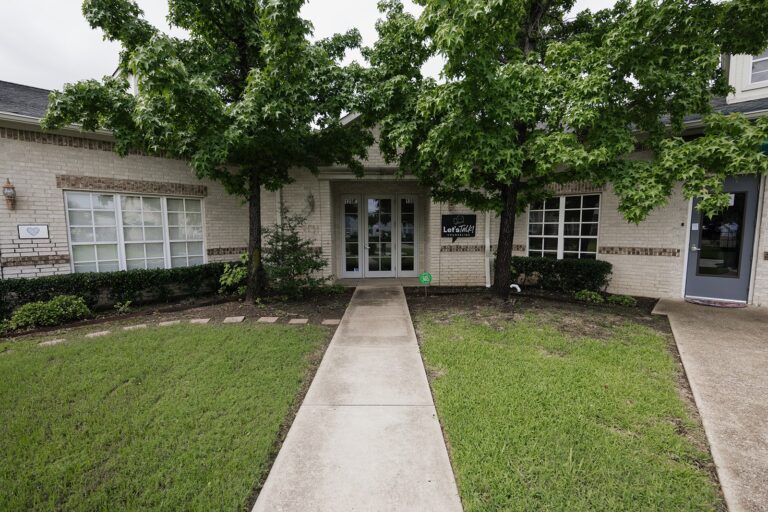
Let'sTalk! is a practice of 14 counselors. We see clients at our office at 4125 Fairway Dr, Suite 130, Carrollton, TX 75010, and by video anywhere in Texas. Same-week openings are often available with some of our clinicians.
Self-pay: $140 with an LPC, $100 with an LPC Associate, $50 with our practicum student. We accept BCBS, Aetna, Cigna and UnitedHealthcare/Optum. See what therapy costs in Texas or our lower-cost counseling options.
Office hours: Monday to Thursday 8am to 7pm, Friday 9am to 5pm, Saturday 9am to 12pm.
Parenting support Meet our counselors Directions and contact